


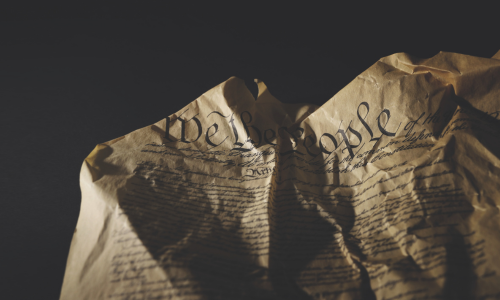
I have an Article II, where I have the right to do whatever I want as president.—Donald Trump
In a few short months, the federal government has destroyed long-standing confidence in the relative autonomy of institutions of higher education from state interference. We have watched as prestigious universities have been humiliated, reduced to making shameful bargains in which they traded academic freedom for federal funding. How did the second Trump administration accomplish this? Could understanding how it did so, and how it is currently scaling up its capacity for control, help us to resist the government’s assault?
The key is understanding the politicization of the civil service. Profound changes have already occurred to the federal workforce since Trump’s second inauguration, with even more consequential ones on the horizon. His administration is putting in place a civil service with the capacity to extend federal investigations of universities and colleges well beyond what we’ve seen thus far, sowing greater fear and creating wider-ranging and farther-reaching precedents. The changes to the federal workforce taking place under a new employment category known as “Schedule Policy/Career” (formerly called “Schedule F”) have significant implications for the Department of Justice’s Civil Rights Division (CRD) and the Department of Education’s Office for Civil Rights (OCR), which primarily administer Title VI of the Civil Rights Act. Title VI, which prohibits discrimination on the basis of “race, color, or national origin” in programs that receive federal financial assistance, has been the Trump administration’s primary vehicle for withdrawing federal funding. By using alleged antisemitism and, to a lesser extent, antiwhite racism as cudgels against universities and colleges, these offices rapidly brought a handful of institutions of higher education to heel and prompted acts of anticipatory obedience by numerous others.
In the short term, heightened censorship and increased repression of academic speech on Palestine and on racial injustice in the United States as well as even more brutal crackdowns on protest, and expressive activity broadly, are likely. In the long term, the transformation of the civil service paves the way for the Trump administration and allied organizations to strong-arm higher education into internally reorganizing itself along what they consider patriotic and entrepreneurial lines.
A Politicized Civil Service
On July 5, 2025, The New York Times editorial board detailed the “politicization of the FBI”: “Trump’s playbook for the FBI is plain to see. He is turning it into an enforcement agency for MAGA’s priorities. He is chasing out agents who might refuse to play along and installing loyalists in their place.”
This playbook has been applied in varying degrees to all federal agencies. Take the CRD in the Department of Justice (DOJ), which the conservative Washington Examiner reported “is undergoing a complete internal transformation under President Donald Trump’s second term—not just of enforcement strategy but of personnel, institutional practices, and long-held assumptions about how federal civil rights laws should be applied.” The purge of civil servants who have served under Democratic and Republican presidents alike and their replacement with Trump loyalists should come as no surprise. Project 2025 showed us that the second Trump administration would be ready to tackle what the Trump-aligned refer to as the “deep state”—namely, the nonpartisan career civil service upon whose expertise our nation has relied for continuity through the regular passing of the executive branch between the Democratic and Republican Parties.
Using a range of methods—a blitzkrieg of executive orders establishing a new regulatory structure being the most important—the Trump administration is upending long-established norms and legal practices that promised (if they did not always deliver) consistency and impartiality from the government. In the months since he has taken office, Trump has signed more than 150 executive orders, a significant number of which have facilitated the fundamental reorientation of federal agencies around MAGA priorities. On January 20, 2025, the first day of his second term in office, Trump signed Executive Order 14158, “Establishing and Implementing the President’s ‘Department of Government Efficiency’ [DOGE].” Throughout February and March, DOGE reduced the numbers of civil servants and, just as important, sent shock troops to intimidate those who survived the bloodbath. There was no mistaking the intended message: This administration does not value your expertise and experience. Many of those spared who could leave did so. In short order, DOGE delivered a dramatically diminished civil service.
The Department of Education’s OCR has been all but completely wiped out. Seven of the OCR’s twelve regional offices overseeing equity and compliance investigations for the federal government have been closed. Most of the duties involved in adjudicating civil rights violations have been handed over to the DOJ, and yet the DOJ has itself experienced a massive reduction in workforce since January 2025.
On January 29, 2025, Trump signed Executive Order 14188, “Additional Measures to Combat Anti-Semitism,” which was followed on February 3 by the DOJ’s announcement of the multiagency Task Force to Combat Anti-Semitism. Led by frequent Fox News commentator Leo Terrell, the task force was created for the purpose of investigating colleges and universities. Meanwhile, according to reporter Sam Levine of The Guardian, “The federal coordination and compliance section [of the DOJ], whose responsibilities include enforcing Title VI of the Civil Rights Act . . . now has zero permanent attorneys.” Consider what this means. Between mid-spring and early summer 2025, when the DOJ brought Columbia and Harvard Universities to their knees over alleged “widespread antisemitic harassment,” the CRD lacked a single experienced, nonpartisan civil rights attorney.
“We all know what the laws are, but within those laws, prosecutors and government lawyers have discretion as to their goals and their priorities,” Harmeet Dhillon, the assistant attorney general in Trump’s DOJ, told The Washington Examiner. “Since we’re an executive branch agency, our priorities are the president’s priorities.” Alleging violations of Title VI, the government withdrew $400 million in federal grants from Columbia. In an attempt to win those research moneys back, Columbia agreed to ban face masks at protests; empower campus police with arrest authority and hire thirty-six officers; restructure disciplinary processes under the university president; place the Department of Middle Eastern, South Asian, and African Studies under administrative oversight; and adopt a federally approved working definition of antisemitism. On June 30, the DOJ found Harvard in “violent violation” of civil rights, calling it “deliberately indifferent” and a “willful participant in anti-Semitic harassment”—a patently absurd judgment. At the time of this writing, Harvard is engaged in settlement talks. It has so far agreed to modify its disciplinary policies and processes, expand training and transparency on antisemitism, place the student-run Palestine Solidarity Committee on probation, and ban external events pending review.
Many of us in higher education have followed these developments—and the multitude of related ones. Few of us, though, may have appreciated that, while the government made quick work of two of the nation’s most prestigious academic institutions, the offices with the power to withdraw federal funds for Title VI violations stood largely empty. Any astonishment we might feel upon realizing that the Trump administration commanded the submission of these universities while severely shorthanded soon dissolves into the revelation that it would not have been able to do so with the OCR and CRD intact. Government attorneys with due-process protections and long habituation in nonpartisan professional ethics would have been reluctant to interpret compliance or noncompliance with civil rights law in the way that Harmeet Dhillon or Leo Terrell did. Such employees had for the last thirty years encouraged voluntary compliance without once freezing or withholding funds, according to reporting by Inside Higher Ed. The employees populating these offices before Trump’s purge would have erected speed bumps, at least slowing down what The Wall Street Journal on May 27 called the “Justice Department U-Turn.” From the perspective of Trump political appointees like Dhillon, the objections these employees might have raised would have been acts of insubordination, reflexes of the “deep state.”
The investigations, such as they were, were run largely by political appointees without the guidance of civil rights attorneys with experience at the agency. Evidence-gathering, on some occasions, appears to have been outsourced to social media, lobbying groups, and pro-Israel advocacy organizations. Meeting with Jake Tapper on CNN after forcing the resignation of University of Virginia President Jim Ryan, Dhillon discussed how she considered UVA in violation of the US Supreme Court’s 2023 ruling in Students for Fair Admissions v. Harvard, and then, referring to herself in the third person, she said, “There’s also discrimination in other areas. There’s significant amounts of antisemitism on the campus. Not according to Harmeet Dhillon but according to the ADL [Anti-Defamation League]. . . . Jim Ryan presided over a failing grade on antisemitism.” The ADL is increasingly discredited by many in higher education because of its conflation of pro-Palestinian and anti-Zionist speech with antisemitism.
In a damning assessment in Mondoweiss, San Diego State University Professor Amira Jarmakani shows that the sixty universities currently under investigation by Trump’s task force for “antisemitic discrimination and harassment” were flagged by pro-Israel advocacy organizations Stand With Us, Hillel, Campus Reform, and the Brandeis Center. “What unites them—far more than a history of campus protests or even individual student complaints about antisemitism—is the instrumentalization of civil rights complaints by Israel advocacy and Christian nationalist organizations,” Jarmakani writes. Because they facilitate the president’s pet priorities, which Dhillon has said in multiple interviews are the DOJ’s North Star, the claims made by these intensely mission-driven organizations appear to be taken at face value.
Task force leader Leo Terrell regularly uses his X account to repost aggressively pro-Israel sources with the comment “noted.” In the context of his account as a whole—a steady stream of breathless support for Israel and praise for Trump and US Attorney General Pam Bondi—“noted” seems to convey an intent to open a case based solely on the decontextualized information thrown up on social media. A favorite source of Terrell’s is StopAntisemitism, an organization that equates calls for Palestinian liberation with antisemitism and trawls social media to discover what it calls “antisemites of the week.” According to The Washington Post, StopAntisemitism’s work is widely seen as a “damaging form of online vigilantism” and doxing. Reposting such purposefully inflammatory content on his feed, and commenting in interviews with Fox News, Newsmax, and similar outlets, Terrell commits the cardinal sin of condemning actors and institutions before the findings of his task force’s supposedly impartial investigations have been issued. In equity and compliance circles, this is known as “poisoning the well”: A supervisor is not supposed to signal his desired outcome to employees doing the investigatory work.
Political appointees in the CRD who bypass methods developed to safeguard a degree of objectivity are part and parcel of the same regime that relies on Canary Mission, an anonymous pro-Israel website, to supply the names of international student protesters for the Office of Homeland Security to seize and deport. Discussing the “complete gutting of all the traditional work of the civil-rights division” with a Wall Street Journal reporter, former senior civil rights official (and current AAUP Council member) Samuel Bagenstos said that “a rump of the civil-rights division [is] being used almost exclusively to pursue right-wing Trumpist agenda items.” The division won’t stay a rump for long. It is likely to remain smaller than it once was, because it will not be enforcing many civil rights protections that once were important backstops of a meaningful democracy, but when even just a little fuller-bodied, the division will be able both to expand its investigations to hundreds more universities and to minimize its dependence on the claims of transparently biased outside sources. This will insulate the administration from accusations of improper methodology but will not restore impartiality. New employees, while possessing the same titles as their predecessors, will be accepting fundamentally altered positions. Their jobs will be stripped of all protections, including the opportunity to appeal adverse decisions by their employer, and their performance will be judged not on their adherence to the law but on their track record in delivering outcomes for the president. Does it go without saying that inexperienced, at-will employees are more susceptible to compromise than are employees with due-process protections and habituation in nonpartisan professional ethics? As The New York Times put it on July 10, the staff “are being forced to choose between the president’s agenda and their ethical obligations as attorneys.”
Implementing Schedule Policy/Career
On January 20, 2025, Trump signed Executive Order 14171, “Restoring Accountability to Policy-Influencing Positions Within the Federal Workforce,” which essentially reinstated the policy known as Schedule F (proposed during Trump’s first administration but rescinded by President Joe Biden before it took effect) and renamed it Schedule Policy/Career. There are about four thousand political appointees in the civil service. These people are typically swapped out when the presidency changes hands. Career civil servants remain regardless of which party wins an election, with senior and midlevel employees working as nonpartisan subject experts in their fields. Schedule Policy/Career exponentially expands the number of politicized positions while retaining their classification as career civil service positions. The Office of Personnel Management (OPM) estimates that about fifty thousand positions will be affected, but experts warn that the actual number is likely to be much higher, potentially hundreds of thousands.
Schedule Policy/Career moves “confidential, policy-determining, policy-making, or policy-advocating” positions into what is called the “excepted service.” Employees in the excepted service are much easier to hire and fire. There is no limit on the number of positions that can be converted, and the vague definition for eligibility makes it possible for the administration to argue that almost all employees—including statisticians, IT specialists, and administrative assistants—are “policy-influencing” in some fashion or another. Agency heads are tasked with creating lists of positions for potential conversion. The OPM, led by political appointee Charles Ezell, guides the process. A low-level civil servant working in IT in Georgia, Ezell was dumbstruck when he got the call from Office of Management and Budget Director Russell Vought to interview for the job. “I feel like Joseph must have felt when he found himself to be second in command in Egypt,” he told byFaith, a Presbyterian magazine. “How did I end up here?” Trump is the final arbiter, determining which positions, and how many of them, are converted to Schedule Policy/Career.
The administration claims that Schedule Policy/Career will solve “longstanding performance management challenges” in the federal workforce, arguing that current civil service protections make it too difficult to remove employees for poor performance or misconduct. “Improving Performance, Accountability and Responsiveness in the Civil Service,” a guidance document, claims that Schedule Policy/Career employees are not required to “personally or politically support” the president but also states that they must “faithfully implement administration policies to the best of their ability” and that “failure to do so is grounds for dismissal.” There is no provision for employees whose constitutional oath might conflict with a presidential directive perceived as illegal or politically motivated. Given that poor performance and insubordination under the new criteria can mean, say, that an employee insisted upon established interpretation of civil rights law rather than one preferred by the Trump administration, the implications are unmistakable. Schedule Policy/Career is a “shameless attempt to politicize the federal workforce by replacing dedicated, qualified civil servants with political cronies,” Lee Saunders, president of the American Federation of State, County and Municipal Employees, says.
The Trump administration has reinforced Schedule Policy/Career by issuing complementary executive orders. Executive Order 14215, “Ensuring Accountability for All Agencies,” signed on February 18, negates the power of watchdog agencies, some of which were created with bipartisan support in response to the Nixon administration’s misuse of the civil service. On March 19, Trump signed Executive Order 14284, “Strengthening the Suitability and Fitness of the Federal Workforce,” which centralizes oversight of the hiring and firing of all positions in all federal agencies overseen by the OPM, undercutting the discretion of agencies to determine their own personnel based on subject-matter expertise rather than the whims of the president. And on April 24, Trump signed Executive Order 14284, “Strengthening Probationary Periods in the Federal Service,” which requires that civil servants be “certified” as having advanced “the public interest” before they can graduate from probationary status. The various executive orders and their guidance documents repeatedly yoke “the President’s agenda” with “the public interest,” mandating, as Executive Order 14215 puts it, “accountability to the President, and through him, to the American people.” As is the wont of authoritarian regimes, the leader’s interests are portrayed as direct proxies for those of the public; simply by having been elected, President Trump embodies the will of the people. Advancing the “public interest” in this instance means facilitating an outcome desired by the president. Taken together, these executive orders establish a regulatory structure that renders the civil service the instrument of one person. This is the definition of arbitrary power. And it makes a mockery of claims to impartiality or the legitimacy of civil rights investigations.
Lawsuits have been filed to stop the blitzkrieg, but it is far from certain that the courts will reverse the changes wrought by Schedule Policy/Career. Trump grounds his power to radically reinvent the civil service in the controversial unitary executive theory, which interprets Article II of the US Constitution as giving the president complete control over all aspects of the executive branch. The Supreme Court has shown itself sympathetic to this interpretation and, since its ruling in the birthright citizenship case Trump v. CASA, it has prohibited lower courts from issuing injunctions that might temporarily stop the exercise of some of the policies outlined in the guidance memoranda accompanying the executive orders.
Consider Hampton Dellinger’s assessment of the Supreme Court. Dellinger, the former head of the Office of Special Counsel, the watchdog agency responsible for guarding the federal workforce from illegal personnel actions and investigating whistleblower claims, challenged the administration’s mass firings of probationary federal employees, successfully getting six thousand employees reinstated. Trump fired him. Dellinger sued and lost. He is declining to appeal the case to the Supreme Court because, as he told National Public Radio, “the trio of judges who decided to sideline me are somewhat conservative, and in that sense, mirror our United States Supreme Court. So I do think the odds of me ultimately prevailing may have been long.”
As Justice Sonia Sotomayor wrote in her dissent in Trump v. CASA, “Other litigants must follow the rules, but the administration has the Supreme Court on speed dial.”
Responsibility in Times of Lawlessness
What happens when the guardrails that civil rights law once provided disappear or are twisted into something unrecognizable? Leaders of universities and colleges across the country—with the likes of Virginia Foxx and Elise Stefanik in Congress and entitled donors or board members breathing down their necks—have already responded to student, staff, and faculty protests in solidarity with Palestine by willfully misinterpreting or rewriting the rules. In order to justify their crackdowns, they have embraced an overly expansive definition of “hostile environment.” As Alex Gourevitch puts it in “The Right to Be Hostile,” “Instead of stating a precise and objective standard that distinguishes action from speech, they have de-emphasized the need to demonstrate objective risks of physical violence or threatening property destruction. Instead, the question authorities are asking is much simpler: whether statements or symbols might cause psychological pain or generate feelings of vulnerability among certain groups. They have gradually redefined the right to be safe as a right to feel safe.”
The pressure on institutions to quell a supposed epidemic of antisemitism on college campuses has created conditions in which faculty members can be dismissed and students expelled without fair hearings or due process, regardless of whether legalities and procedures have been observed. The AAUP’s recent investigation of Muhlenberg College shows how these pressures unfolded in the case of Maura Finkelstein, a tenured professor who was dismissed for expressing anti-Zionist views.
Schedule Policy/Career represents a new phase in Trump’s authoritarian assault on higher education that will test our moral courage and capacity for solidarity. So far, only a handful of institutions have openly traded academic freedom for federal funding. Many more will be asked to do so. This means that many more people will have the choice either to compromise their ethics and be complicit in the subversion of civil rights law or to refuse and follow the principles of professional ethics that have guided them thus far in their careers.
When the government threatens universities with the withdrawal of federal funds, it threatens their existence. This is as true for institutions that do not receive large research grants as for those that do, because state universities rely on Pell Grants to keep the majority of their students enrolled and so are at least as vulnerable as large private universities. Only the wealthiest private liberal arts colleges currently barred from federal funds on religious grounds enjoy a significant degree of financial independence from the state. The vast majority of universities and colleges will experience an investigation by the Task Force to Combat Anti-Semitism or the CRD as a potentially existential crisis.
The crackdowns on expressive activity in support of Palestine won Columbia very few points with the Trump regime, but administrators everywhere remain convinced that proving themselves zealous in suppressing anything that offends pro-Israel sentiment will spare them the worst-case scenarios. This—coupled with activist board members and big-ticket donors aligned with the Trump administration—has placed university officials involved in adjudicating cases regarding faculty and student discipline for pro-Palestine speech in positions in which they think they have no choice but to rule in ways they might not have considered defensible in the past. Individuals acting on behalf of the university—even when they fully understand that an incident does not implicate Title VI because it involves speech protected by the First Amendment, speech protected by academic freedom in the form of credible research and its dissemination, or speech that has not been severe or pervasive enough to constitute a hostile environment—find themselves under incredible pressure to impose punishment in order to chill speech that, because of the Trump administration’s policies, may threaten the existence of their university and their own jobs. Equity and compliance officers now watch, sidelined, as disciplinary cases that once would have been under their jurisdiction are outsourced to law firms retained by the university to mitigate the risk of retribution by the Trump administration.
These actors are making rational judgments when they issue indefensible findings, but they are not making morally responsible ones. They ruin individual lives while telling themselves that they are working toward the greater good. Their gaslighting may buoy them for a while, but it is ultimately self-defeating. They are not the ones who pull the trigger on federal funds; the Trump administration is. They are the ones, however, who directly cause the expulsion of students, the firing of at-will staff, and the termination of faculty appointments.
Individuals must preserve their capacity for independent judgment, refusing complicity in systems that demand injustice. The pressure we put on ourselves to act morally must also be pressure we put on one another, including the equity and compliance officers on our campuses with whom we must build relationships and form bonds of solidarity. We face a federal government armed with Title VI that terrorizes administrators who, in turn, terrorize us. Under a realigned, servile civil service, we can expect that the DOJ will find creative ways to expand the options for threatening federal funding over alleged violations of civil rights beyond the current preoccupation with pro-Palestinian speech. And we can expect that the DOJ will investigate hundreds more campuses, creating new precedents as it goes. Given all of its sticks, the few carrots the federal government will offer to reorganize higher education around antidemocratic ends may come to seem irresistible.
The time to educate one another about Schedule Policy/Career and the misapplication of civil rights law is now. This education must be followed by organized actions designed to build solidarity among faculty, staff, and administrators. Research shows that while some individuals choose to act righteously in times of lawlessness, they are the exception. We must simultaneously pressure and embolden our colleagues to assume personal responsibility and make just decisions about the fate of individuals—decisions that nonetheless may have immediate adverse consequences for themselves and also perhaps for their institutions. In the long run, these acts of personal responsibility, so long as they are acknowledged and amplified by others, make it possible for us to maintain a shared sense of reality and hope for the future.
Jennifer Ruth is a professor in the School of Film at Portland State University and the director, with Jan Haaken, of the film The Palestine Exception: What’s at Stake in the Campus Protests? She is the author, with Michael Bérubé, of It’s Not Free Speech: Race, Democracy, and the Future of Academic Freedom and a coeditor of The Right to Learn: Resisting the Right-Wing Attack on Academic Freedom. Her email address is [email protected].